
Six guides to locks and keys, in reading order
The first three explain how locks and keys work as mechanisms. The last three apply that to cars, to choosing locks for a home and to losing keys. The glossary defines every term used along the way.
-
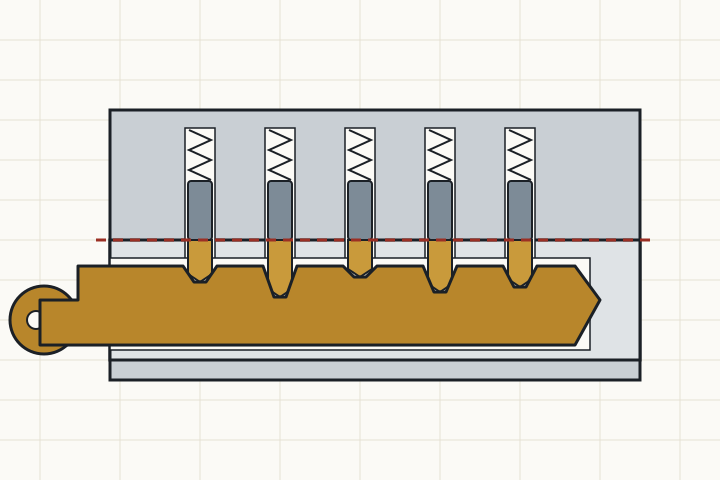
How a pin tumbler lock works
The mechanism inside most house-door cylinders: the plug, the pin stacks, the springs and the shear line, and why only the right key lets the plug turn.
-
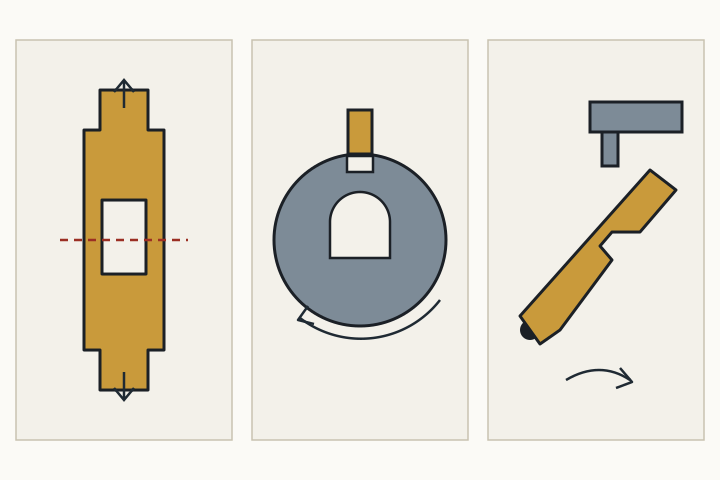
Wafer, disc and lever locks compared
Three other ways a key can line up a lock: flat sliding wafers, rotating notched discs and pivoting levers with gates, each explained as a mechanism.
-
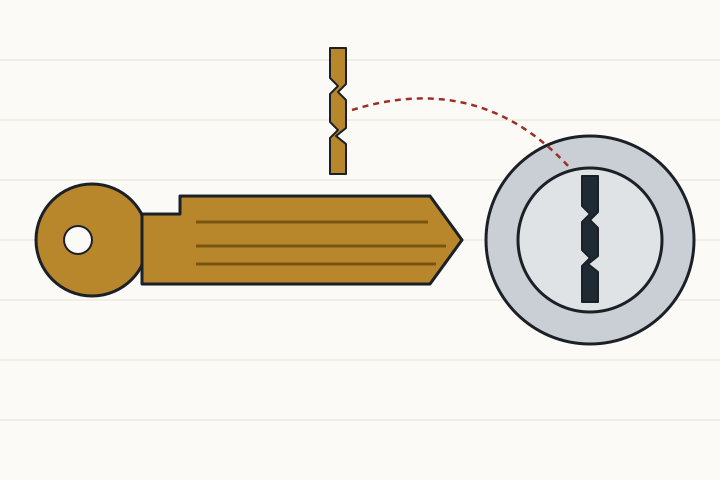
Keys, key blanks and keyways
What a key blank is, how the shape of a keyway decides which blanks fit, how master key systems use that shape, and what key control means.
-
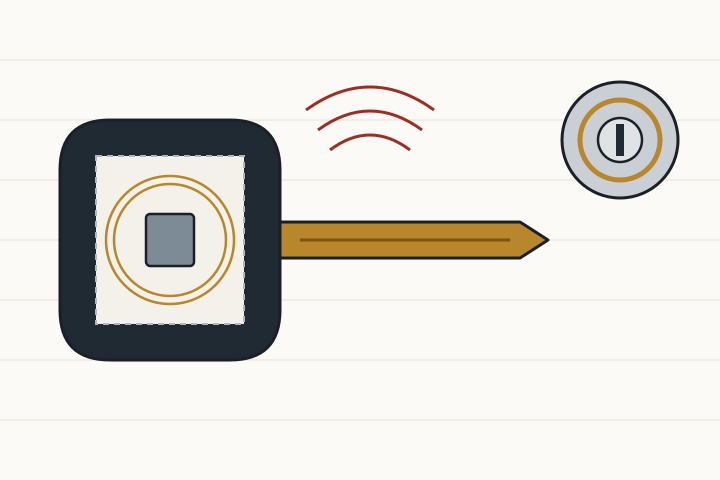
Car locks and transponder keys, in general terms
How a vehicle immobilizer and a key with a chip work together at a general level, what US federal rules expect of an antitheft device, and what that means for lost car keys.
-
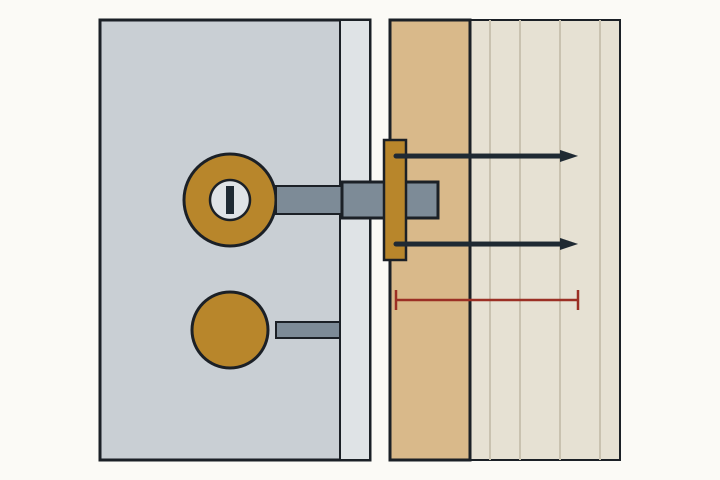
Choosing locks for a home: grades, deadbolts and strike plates
How ANSI/BHMA grades and residential ratings work, single and double cylinder deadbolts, and why the strike plate and its screws matter as much as the lock.
-
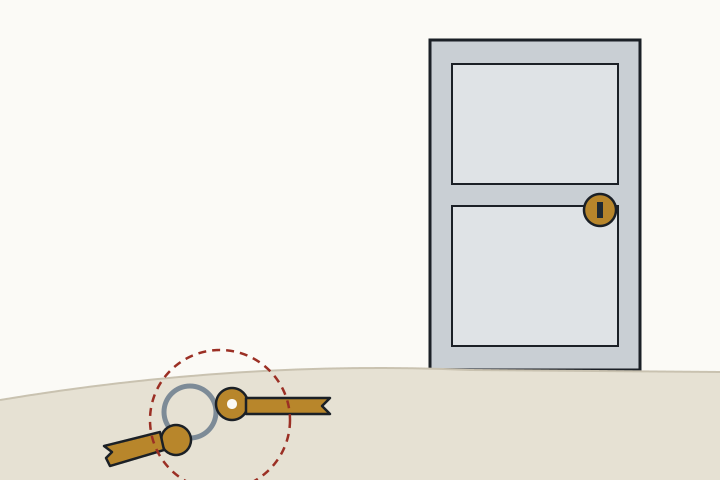
What to do after losing your keys
A calm order of steps after house or car keys go missing: what police guidance says about changing locks, rekeying explained, and how consumer agencies say to hire a locksmith safely.
-
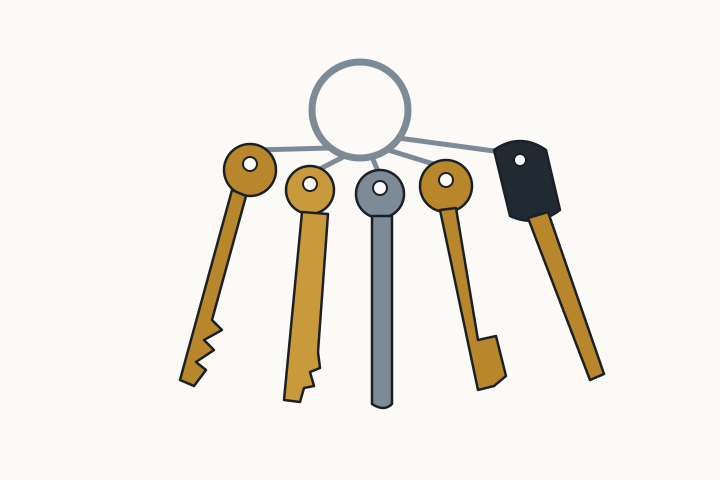
Lock and key glossary
Plain definitions of the lock and key terms used on this site, from bitting and blank to strike plate and transponder, each tied to the guide that explains it.